
When pallets are lifted in the production hall, the same hand movements are repeated for hours on end, or people stand for long days, employees feel it in their bodies. That’s why Jaakkoo-Taara has an experienced professional supporting everyday work, who understands the daily life of a printing house and knows what it demands from the body.
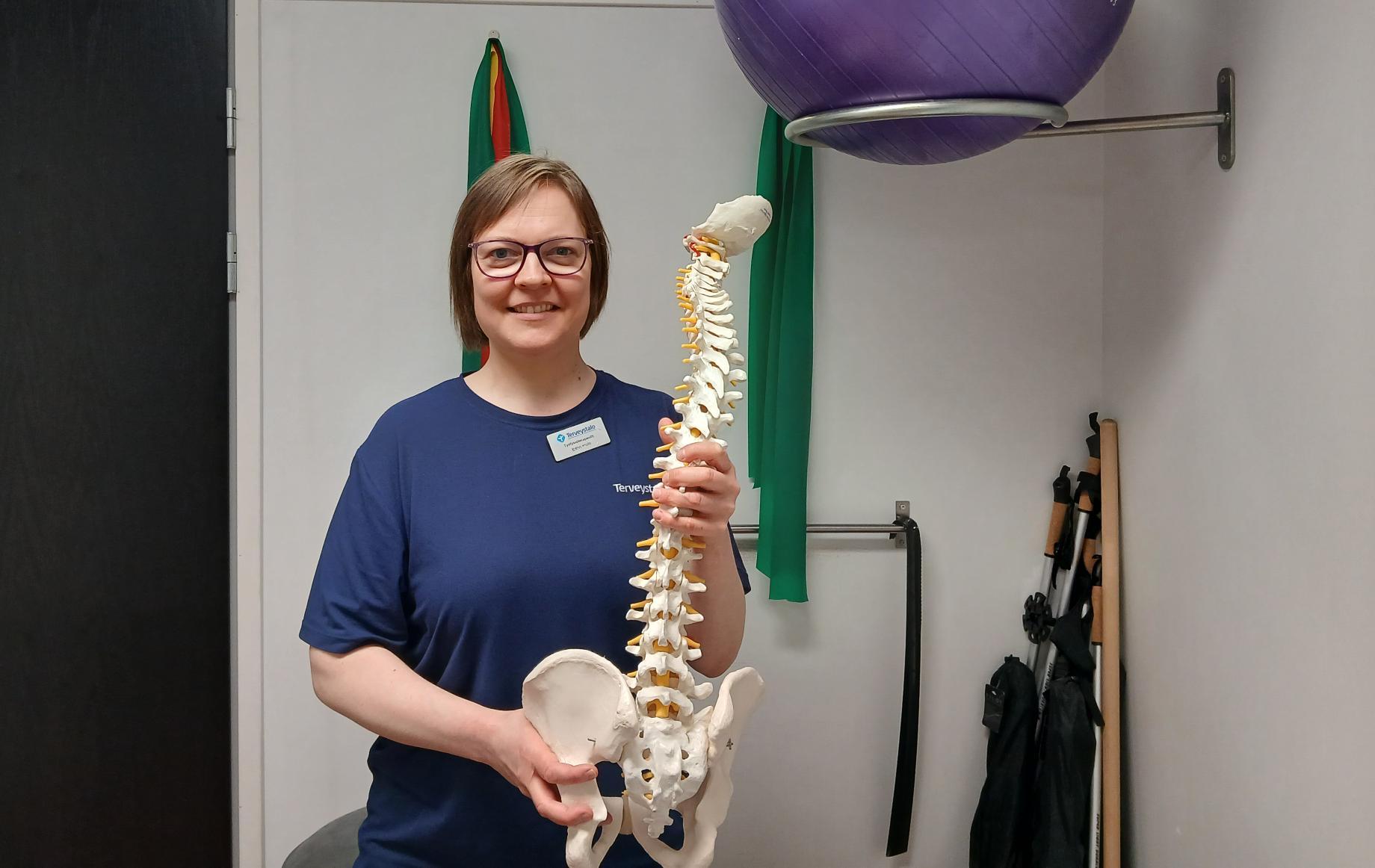
Eevi Pulli is an occupational physiotherapist with nearly 17 years of experience in the field, 13 of which she has spent at Terveystalo. A few years ago, she took on the role of lead occupational physiotherapist for Jaakkoo-Taara and has since been actively involved in developing the company’s physical ergonomics.
Different roles, one goal
At Jaakkoo-Taara, people work in very different roles. Pulli takes them all into account.
“I aim to ensure the physical ergonomics of both production and office employees equally”, she says.
The worlds of production and the office differ significantly. In production, work is physical, mobile, and often involves standing. In the office, work is more static, which can lead to underuse of the body if movement is limited.
In both environments, the starting point is the same: Pulli strives to find ways for everyone to do their work while avoiding harmful physical strain.
Solutions for common production challenges
The most typical strain factors in printing house production work are standing, manual lifting, and repetitive movements. These most often affect the back and upper limbs, such as the wrists, fingers, forearms, and shoulders.
Jaakkoo-Taara has invested in practical solutions. The production area has been equipped with lifting tables, anti-fatigue mats, and step platforms, whose everyday use reduces strain on the back and improves working postures.
“During ergonomics visits it’s great to see that lifting devices, step platforms, and mats have been acquired, and most importantly, they are actually being used,” Pulli says with satisfaction.
In the office, employees’ well-being is supported, among other things, by height-adjustable desks that encourage posture changes, various ergonomic chairs, computer glasses, and exercise equipment.
Movement is medicine, even during time off
Pulli emphasizes that choices made outside of work play a major role in well-being. When work repeats the same movements and positions day after day, the body becomes unevenly loaded.
“I recommend that everyone engage in physical activity they enjoy. Certain muscle groups get very little use if there’s no variety of movement outside of work.”
It’s not about performance or specific achievements, but about giving the body diverse stimulation and allowing it to recover from daily strain.
Stronger together
Pulli strongly believes in the power of collaboration. In matters related to work ability, she doesn’t work alone but as part of a broader occupational health team that looks at the whole picture: physical fitness, sleep, nutrition, and other factors affecting endurance.
“When things are considered together, we usually achieve the best outcome.”
This also reflects her relationship with Jaakkoo-Taara’s employees. The goal is not to hand out generic instructions, but to find healthier ways together.